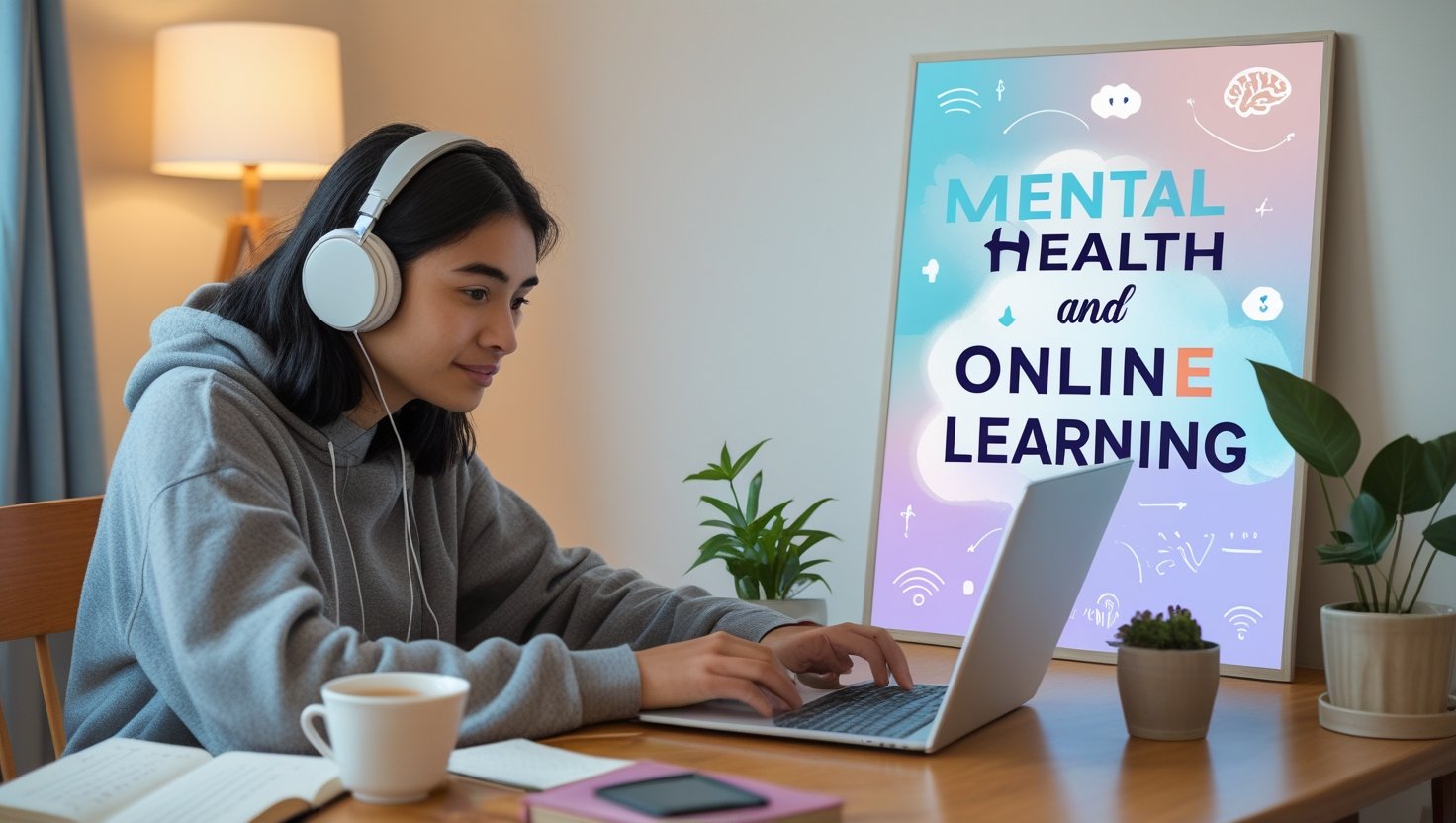
Online learning has completely changed the way education. Ever since digital platforms have replaced classrooms, the pressure on the mental health of students has also reduced. Studying from home seems easy, but in reality, this experience is not so simple for everyone. When a student is in a physical classroom, they gets a routine, is with friends, and gets face-to-face guidance from the teacher. But these things are missing in online learning, which has a direct impact on their mental health.
During online classes, students feel lonely, they lack motivation and sometimes they do not understand how to manage their studies. Spending too much time on the screen tires out both their eyes and mind, which is called digital fatigue. Apart from this, when there is no planning or routine for anything, stress and anxiety start building up. All these things gradually affect the mental well-being of students.
This blog has been written to understand and explain this important topic. We will see what mental health challenges are faced during online learning, how to create a balanced routine, and how to keep yourself mentally strong with support systems and self-care. Every student needs to understand that a healthy mind is the foundation of success.
Common Mental Health Challenges in Online Learning:
The method of online learning may seem easy, but in reality, this system creates a lot of mental health challenges for students. The first and biggest issue is loneliness. When students are unable to meet their friends, their social circle becomes small, and they feel emotionally lonely. Apart from this, lack of motivation is also a big challenge. When the teacher is not physically present, it becomes difficult for the students to take an interest in studies. The pressure of something or the stress of deadlines increases their anxiety.
Then comes the issue of digital fatigue, where students have to continuously look at the screen. Staring at the screen for a long time tires out not just the eyes but the brain as well. Often, students are also confused as to how they should set their routine. When there is no fixed time to wake up in the morning or to sleep, a part of the day is spent in stress and frustration. Apart from all this, there are also many distractions in the home environment, like noises, interference from family, or slow internet.
All these things have a direct impact on mental health. When stress increases, concentration decreases, and the learning process slows down. These challenges, if not understood on time, can lead to depression and emotional burnout. That is why students need to identify these problems and find solutions to them.
Creating a Balanced Routine for Better Mental Health:
A balanced routine is very important for mental health, especially when you are part of online learning. The biggest advantage of online education is that you can study at a flexible time, but if this flexibility is not used properly, the routine gets disrupted, and stress increases. There should be a fixed time to get up in the morning so that the day starts with energy. After that, a proper timetable should be made which accounts for classes, homework, breaks, and personal time.
It is important to take out some time every day for physical activity, such as stretching, yoga, or a light walk. These activities not only refresh the body but also relax the mind. Sleeping time should also be fixed, because good sleep improves both mental clarity and mood. Use of mobile and screen should be reduced before sleeping so that sleep is not disturbed.
Taking small breaks for yourself should also be a part of your routine. Taking a break of 5-10 minutes after every 45-60 minutes is productive. These breaks relax the mind and improve concentration. You should also keep time for self-care in your routine, in which you do your favorite things like listening to music, painting, or drinking simple tea. A good routine not only improves academic performance but also provides mental peace.
Building Virtual Connections and Social Support:
The most important thing you miss out on in online learning is spending time with friends. When you are in physical class, you have social interaction which reduces stress and increases motivation. But in online system this interaction is very less, so making virtual connections and getting social support becomes very important. Often students think that they will have to study alone in online classes, but this is not the case.
You can form virtual study groups where you and your classmates meet and help each other. Discussion sessions can be arranged on platforms like Zoom or Google Meet, where you can discuss topics and develop mutual understanding. Social media can also be used positively if you join educational or interest-based groups where like-minded people are present. These groups provide both motivation and emotional support.
Apart from this, if you are facing any mental health issues, then you must talk to your close friends or family members. Sometimes just talking is enough to ease your grief. Colleges and universities also offer counselling services where you can get professional help through online sessions. When you stay socially connected, loneliness is reduced, and you feel emotionally strong. This support system makes online education more effective and manageable.
Utilizing Mental Health Resources and Coping Strategies:
If you are facing mental stress or anxiety during online learning, there are many resources and coping strategies available to deal with it. First of all, you should understand that mental health is as important as physical health. If you are emotionally disturbed, both focus and learning become difficult. In such a situation, you should adopt some effective methods that give you relief.
Online therapy and counseling services are very easily accessible today. You can check the website of your educational institute, where you can get contact of mental health counselors. Often, these services are free for students. Apart from this, meditation and using mindfulness apps like Headspace or Calm can help you relax. 10–15 minutes of breathing exercise every day can reduce your stress levels significantly.
Self-talk is also a strong tool in coping strategies. When you are thinking negatively, positively talk to yourself. Make your goals realistic and do not put unnecessary pressure on yourself. Journaling is also a great habit in which you can release your emotions by writing. Getting good sleep, eating healthy food, and spending some time with nature is also helpful for your overall mental well-being. All these strategies improve your learning process and help you keep mentally focused and relaxed.
Conclusion:
Online education has given us flexibility and convenience, but it has also brought some mental health issues. When you spend the whole day in front of the screen, routine gets disturbed, and social interaction reduces, the pressure on the mind increases. Therefore, every student must understand that mental health cannot be ignored. Just as exercise and diet are important for physical health, relaxation, support, and routine are important for the mind.
Giving priority to mental health is not a weakness but a sign of understanding. If you recognize your emotions, find solutions to them, and make time for yourself, you make yourself stronger. Getting social support, using counseling services, and balancing your routine while learning online are very helpful. You should also understand that it is not necessary to manage everything alone sometimes it is important to seek help from someone.
The real purpose of education is not just to get grades, but also to become a strong and balanced person. If you are mentally healthy, you’re learning experience will be better and you will feel more confident in your life. The message of this blog is that it is every student’s right as well as responsibility to take care of their mental health.
FAQs:
1. Why does online learning affect students’ mental health?
Online learning can lead to loneliness, lack of motivation, and digital fatigue. Without a proper routine and face-to-face interaction, students may feel isolated and overwhelmed, which directly impacts their mental well-being.
2. What is digital fatigue, and how can I deal with it?
Digital fatigue happens when you spend long hours in front of a screen, leading to tired eyes and mental exhaustion. To avoid this, take short breaks every 45–60 minutes, reduce screen use before bed, and do offline activities like walking or stretching.
3. How can I create a balanced routine for better mental health?
Start your day with a fixed wake-up time, follow a proper timetable, take regular breaks, include physical activities, and get enough sleep. Also, reduce unnecessary screen time and make space for hobbies or self-care practices.
4. What can I do to stay socially connected during online learning?
Join virtual study groups, participate in video discussions, and engage with classmates on social media or chat platforms. Staying connected with friends, family, or college counselors helps reduce loneliness and provides emotional support.
5. Are there any resources for students dealing with stress or anxiety?
Yes, most educational institutions offer online counseling services. You can also use mental health apps like Calm or Headspace, practice meditation or breathing exercises, maintain a journal, and talk to someone you trust for emotional relief.