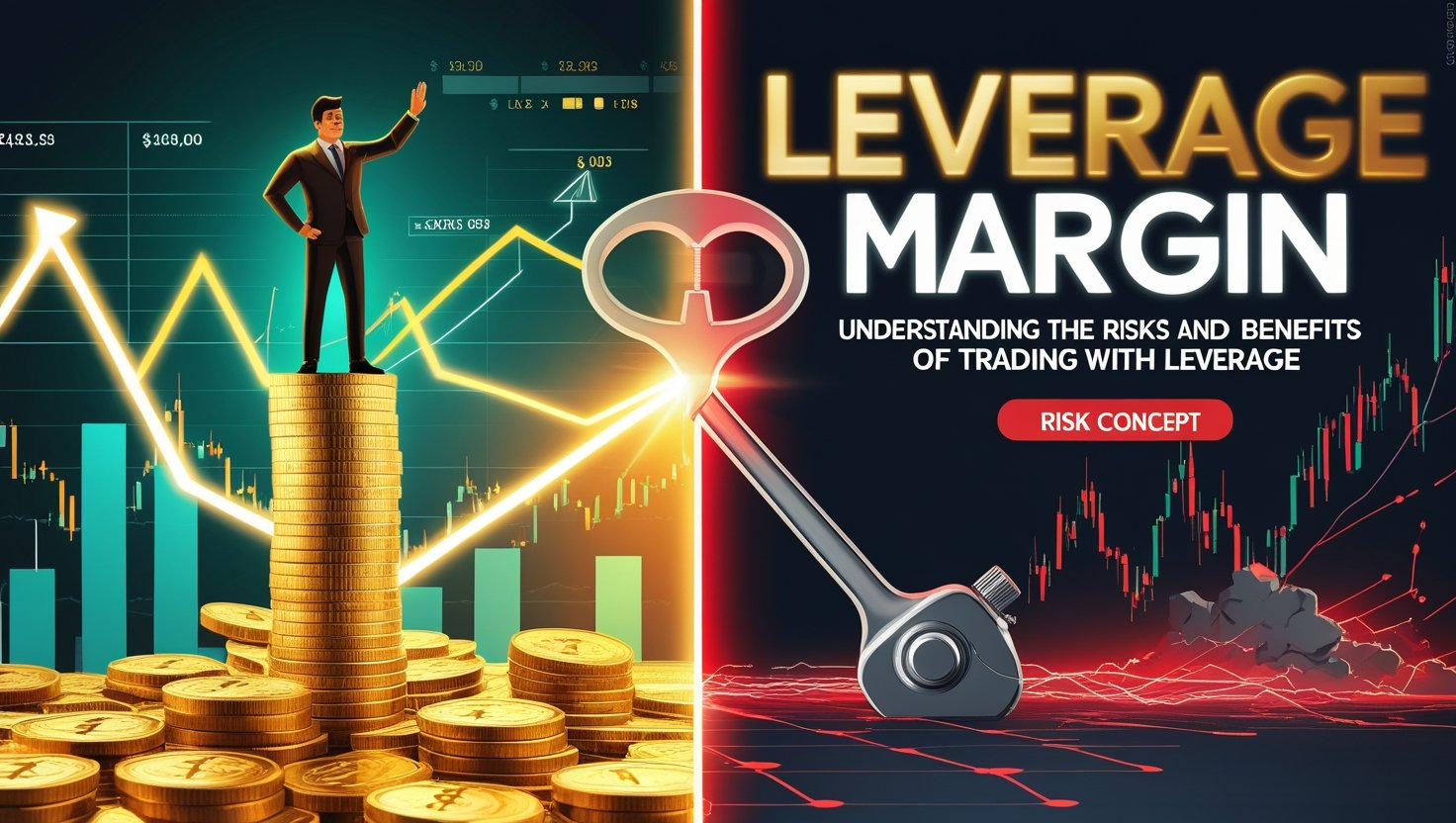
In Forex trading, leverage and margin are two tools that allow you to trade larger amounts than your available capital. This concept is very powerful, but it also comes with huge risks. Leverage means using borrowed capital to open large positions with a small investment. Margin is the amount you have to keep as security with your broker.
In simple terms, if you have $100 and you are using 1:100 leverage, you can trade up to $10,000. The advantage of this is that if the market goes in your favor, you get more profit. But if the market goes against you, your loss can also be overcome very quickly.
Leverage and margin can be confusing for beginners, so it is important to understand their basic structure. Every broker has its margin requirements, and if your loss exceeds a certain level, a margin call comes where the broker demands more funds from you or automatically closes your position. In this blog, we will explain in detail the benefits and risks of leverage and margin and see how you can use these tools smartly and responsibly.
How Leverage Works & Amplifying Gains and Losses:
Leverage means that you can take a bigger trading position with your small capital. This broker “borrows” you the money so that you can open a bigger trade. For example, if you have only $100 but you use 1:100 leverage, you can trade for $10,000. If the market goes in your favor, you get a profit of $10,000, not $100.
But it is important to understand the other aspect of leverage as well. If the market moves against you, then losses also happen at double speed. This is why leverage is called a double-edged sword. It can help you earn a lot but at the same time it can also wipe out your entire account.
High leverage seems tempting, especially to beginners, but it only works when your strategy is strong and your risk control is very tight. If you work with discipline, leverage can become a useful tool. But without planning and risk management, leverage can be used only for losses.
Understanding Margin Requirements and Margin Calls:
Margin means the amount you have to keep with the broker as security when you trade with leverage. This margin is a kind of deposit that is required to keep your position open. For example, if you want to trade $1,000 and the broker is asking for a 10% margin, then you will have to invest only $100.
But if the market goes against you and your losses start increasing, the broker gives you a warning which is called margin call. Margin call means that your account has gone so low that the broker is asking you to either deposit more money or your position will be closed. If you do not give the funds on time, the broker automatically closes your trade so that he does not incur any loss.
Margin calls are dangerous if you misuse leverage. Hence, one should always use proper stop loss and closely monitor the margin level. Margin should be used only after understanding the risk otherwise you may lose all your capital.
The Risks of Using High Leverage:
The biggest risk in high-leverage trading is that even a small market movement can cause you huge losses. When you use high leverage, your position size is many times larger than your original capital. This means that if the market moves against you by just 1%, your entire capital can be wiped out.
Many new traders take high leverage thinking that their profits will be higher, but they forget that their losses will also be double. Using high leverage can turn your trading into gambling if you do not have a proper strategy.
High leverage also creates pressure psychologically. When a trade is going against you you panic, make wrong decisions and sometimes instead of accepting a loss you end up taking more leverage and incurring more losses. Professional traders also use high leverage only in specific and well-calculated situations. So it is important that you first practice, develop a strategy and then use leverage responsibly.
Smart Ways to Use Leverage Responsibly:
If leverage is used with understanding and discipline, it can become a powerful tool in your trading. The first smart approach is to always start with low leverage, especially if you are a beginner. 1:5 or 1:10 leverage is safer for new traders, this helps you manage risk.
The second step is to place a stop loss on every trade. This can protect you from unexpected market movements. Never use 100% of your full capital. Always keep a part of your funds in reserve so that you do not have to face a margin call.
The third smart strategy is to use leverage only in trades where you have high confidence and have done proper analysis; taking high leverage without planning can lead to losses. and the most important thing is to keep your emotional control strong. The pressure of leverage can force you to make wrong decisions. Trading is a long-term game; only patience and strategy can give you consistent profits.
Conclusion:
Leverage trading is a tool in the forex market that can give you great opportunities with a small investment, but if you do not use it with understanding, it can also cause you great financial damage. Profit multiplies with leverage, but loss also increases at the same rate.
The purpose of this blog was that you understand the basic structure of leverage and margin, what a margin call is, what the risks of high leverage are, and how leverage can be used responsibly. Professional traders treat leverage as a tool, not as gambling. You should use leverage according to your capital, risk tolerance, and experience. Never take excessive leverage out of greed, otherwise, you will only incur loss instead of profit.
If you use leverage with strategy, proper stop loss, and a realistic mindset, it can improve your trading performance. The secret of success in trading is balance – neither too aggressive nor too cautious. A smart trader is one who knows how to make the right decision between opportunity and risk.
FAQs:
- What is leverage in forex trading, and how does it work?
Leverage in forex trading means borrowing money from a broker to control a larger position with a smaller amount of your capital. For example, with 1:100 leverage, $100 can control a $10,000 trade. This magnifies both potential profits and losses, allowing traders to benefit from small price movements but also exposing them to significant risks if the trade goes against them. - What is a margin, and how is it related to leverage?
Margin is the security deposit a trader must maintain in their account to open and hold a leveraged position. It is directly linked to leverage. For instance, if a broker requires a 10% margin on a $1,000 trade, you need to deposit $100. If your account value falls too low, you may face a margin call, requiring more funds to keep your trade open. - What is a margin call and why is it important?
A margin call occurs when your trading account equity falls below the required margin level set by your broker. When this happens, the broker may ask you to deposit more funds or will automatically close your position to prevent further losses. Margin calls are crucial because they help prevent traders from losing more than they have invested. - What are the risks of using high leverage?
High leverage can lead to massive losses even from small market movements. New traders often misuse it, expecting quick profits but forgetting that losses are also amplified. Without a solid risk management strategy, high leverage can quickly drain your account, and the emotional pressure it creates can result in poor decision-making. - How can traders use leverage responsibly?
To use leverage wisely, traders should start with low leverage (like 1:5 or 1:10), always use stop-loss orders, avoid risking their entire capital, and trade only after proper analysis. Emotional control and a disciplined approach are key. Treat leverage as a tool, not a shortcut to profit, and use it only when you have a strong, well-tested trading plan.